If you have ever wondered, “What is a digital creator?”, you are not alone. As social media, online businesses, and content platforms continue to grow, more people are searching for information about digital creators and how they build successful careers online.
A digital creator is someone who creates and shares valuable content on the internet to educate, entertain, inspire, or help an audience. Digital creators can produce videos, write blogs, create podcasts, design graphics, share tutorials, or build communities across different online platforms.
The internet has completely transformed the way people learn, communicate, and consume information. Instead of relying only on traditional media, millions of people now turn to creators for advice, entertainment, product recommendations, and educational content.
This shift has led to the rise of the creator economy, where individuals can build personal brands, grow loyal audiences, and earn income through content creation. From YouTubers and bloggers to educators, entrepreneurs, and social media influencers, digital creators are shaping the future of online communication.
One of the biggest advantages of becoming a digital creator is that almost anyone can start. You do not need expensive equipment or a large team. Many successful creators began with a smartphone, a simple idea, and a desire to share their knowledge with the world.
In this What Is a Digital Creator? Complete Guide for Beginners in 2026, you will learn what a digital creator is, what digital creators do, how they make money, the skills they need, and how you can start your own creator journey today.
Why Digital Creators Are Growing So Fast
The growth of digital creators is one of the biggest shifts in the modern economy. Every year, millions of people decide to start creating content because the opportunities continue to expand.
One major reason is the widespread availability of internet access. Billions of people now use smartphones daily, creating a massive audience for online content. Creators can reach people across countries and continents without needing a traditional media company.
Another reason is changing consumer behavior. People increasingly trust creators more than traditional advertising. When someone follows a creator for months or years, they often develop trust in that person’s recommendations and expertise.
Technology has also reduced the barriers to entry. Video editing software, graphic design platforms, AI tools, and affordable equipment allow creators to produce professional-quality content without huge investments.
The creator economy itself has become a powerful industry. Companies are spending billions of dollars on creator marketing because audiences engage more with creators than with traditional advertisements.
Remote work trends have also contributed to creator growth. Many people are looking for flexible careers that provide independence and creative freedom. Content creation offers both.
As social media platforms continue expanding and monetization opportunities increase, digital creators are expected to become even more important in the years ahead.
Digital Creator Meaning Explained
A digital creator is a person who creates original content and shares it through digital platforms to educate, entertain, inspire, or inform an audience.
The content may take many forms, including:
- Videos
- Blog posts
- Podcasts
- Social media posts
- Graphics
- Online courses
- Newsletters
- Digital products
In simple terms, a digital creator uses the internet to share knowledge, skills, creativity, experiences, or opinions with other people.
What separates a digital creator from an average social media user is purpose and consistency. Most people post content occasionally for friends and family. A digital creator publishes content strategically to build an audience, provide value, and often generate income.
For example, a teacher explaining geography concepts through videos is a digital creator. A photographer sharing editing tutorials is a digital creator. A business consultant publishing marketing advice is a digital creator.
The creator economy continues to grow because creators solve real problems. Some teach useful skills. Others provide entertainment. Many inspire people to achieve goals or make better decisions.
Unlike traditional media careers, digital creators have complete control over their content and audience relationships. They can build communities, launch products, and generate income without relying on publishers or media companies.
This freedom is one of the main reasons digital creation has become such an attractive career path.
What Does a Digital Creator Do?
Many people believe digital creators simply upload content and wait for views. In reality, successful creators perform a wide range of tasks that combine creativity, marketing, communication, and business skills.
The process usually begins with research. Creators identify topics that their audience cares about and look for opportunities to provide value. They study trends, keywords, questions, and audience behavior before creating content.
Once an idea is selected, the planning stage begins. Creators outline their content, gather information, prepare scripts, and organize resources.
Next comes production.
Video creators record footage, edit clips, create thumbnails, and write titles.
Bloggers research keywords, write articles, optimize content for search engines, and update existing posts.
Podcasters record audio, edit episodes, and publish content across listening platforms.
Creators also spend a significant amount of time building relationships with their audience. They respond to comments, answer questions, engage in discussions, and create content based on audience feedback.
Another critical responsibility is analyzing performance data. Successful creators constantly review metrics such as:
- Views
- Watch time
- Engagement rates
- Audience retention
- Click-through rates
- Website traffic
- Conversions
These insights help creators understand what works and what needs improvement.
Marketing is also an important part of content creation. Great content often needs promotion. Creators use SEO, email marketing, collaborations, and social media distribution to increase visibility.
In many ways, a digital creator is simultaneously a writer, marketer, designer, editor, strategist, community manager, and entrepreneur.
Types of Digital Creators
The creator economy includes many different types of creators serving different audiences.
YouTube Creators
YouTube creators publish videos ranging from tutorials and educational lessons to product reviews, interviews, documentaries, and entertainment content. Many full-time creators have built successful businesses through YouTube.
Facebook Creators
Facebook creators focus on community building through videos, reels, live streams, groups, and posts. Many use Facebook to engage audiences and monetize content through creator programs.
Instagram Creators
Instagram creators specialize in visual storytelling through photos, reels, stories, and carousel posts. Popular niches include fashion, travel, fitness, lifestyle, and photography.
TikTok Creators
TikTok creators create short-form videos designed to entertain, educate, or inspire. The platform allows creators to gain visibility rapidly through its recommendation system.
Bloggers
Bloggers create written content that appears on websites and search engines. Blogging remains one of the most effective ways to generate long-term organic traffic.
Podcasters
Podcasters create audio-based content that audiences can consume while working, exercising, or traveling.
Graphic Designers
Graphic creators produce visual assets such as templates, infographics, social media graphics, and digital products.
AI Content Creators
AI creators use artificial intelligence tools to improve productivity, research, content generation, and workflow automation.
Gaming Creators
Gaming creators publish gameplay videos, tutorials, live streams, reviews, and esports-related content.
As technology evolves, new creator categories continue to emerge, creating even more opportunities for aspiring creators.
Digital Creator vs Influencer
Although the terms are often used interchangeably, they are not exactly the same.
| Digital Creator | Influencer |
|---|---|
| Creates original content | Influences audience decisions |
| Focuses on value | Focuses on trust and influence |
| Skill-based growth | Personality-based growth |
| Builds content assets | Builds audience influence |
| Often teaches or entertains | Often promotes products |
A digital creator focuses on producing valuable content. People follow them because they provide useful information, education, inspiration, or entertainment.
An influencer focuses more on influencing audience opinions, behaviors, and purchasing decisions.
However, many successful creators eventually become influencers because audiences trust them. Likewise, many influencers create valuable content to maintain engagement.
The most successful individuals often combine both roles. They create excellent content while also building strong audience trust.
Digital Creator vs Content Creator
Many beginners assume that a digital creator and a content creator are exactly the same. While the two terms are closely related, there are slight differences.
A content creator is anyone who creates content. This can include articles, videos, graphics, podcasts, newsletters, social media posts, ebooks, and other forms of media. The primary goal of a content creator is to produce valuable content for a specific audience.
A digital creator, on the other hand, usually goes beyond content production. Digital creators focus on building communities, developing personal brands, growing audiences, and creating businesses around their content.
For example, a freelance writer creating blog posts for clients may be considered a content creator. However, a person who publishes videos on YouTube, builds a Facebook community, sends newsletters, and sells online courses is often considered a digital creator.
In today’s creator economy, the line between these roles is becoming increasingly blurred. Most successful creators create content while also building brands and businesses around their expertise.
Rather than worrying about labels, beginners should focus on creating valuable content and helping their audience solve problems.
How to Become a Digital Creator
Becoming a digital creator is easier than ever, but building a successful creator business requires patience, consistency, and continuous learning.
Step 1: Choose a Niche
Your niche is the topic you will focus on.
Popular creator niches include:
- Education
- Technology
- Finance
- Business
- Health
- Fitness
- Travel
- Gaming
- Photography
- Digital Marketing
- Personal Development
The best niche usually combines three things:
- Something you enjoy
- Something you understand
- Something people want to learn about
Choosing a clear niche helps attract the right audience and establish authority.
Step 2: Create Valuable Content
Once you’ve selected a niche, begin creating content regularly.
Focus on helping people.
Answer questions.
Solve problems.
Share experiences.
Teach skills.
The creators who grow the fastest are often those who consistently provide value rather than chasing viral trends.
Step 3: Be Consistent
Consistency is one of the most important factors in creator success.
Most creators do not see immediate results.
Your first article may receive very little traffic.
Your first video may receive only a few views.
Your first social media post may receive minimal engagement.
This is completely normal.
Successful creators understand that growth compounds over time.
Publishing consistently helps improve skills, increase visibility, and build audience trust.
Step 4: Build an Audience
Content creation is not just about publishing.
It is also about building relationships.
Reply to comments.
Answer questions.
Ask for feedback.
Create content based on audience interests.
The strongest creator businesses are built on communities rather than follower counts.
Step 5: Learn SEO and Content Distribution
Even the best content will struggle if nobody sees it.
Learning SEO helps creators reach people through search engines.
Understanding social media algorithms, content distribution, and audience behavior can significantly improve growth.
For example, creators often use keyword research tools to discover what people are searching for before creating content.
Step 6: Monetize Your Content
Once you have an audience, you can begin exploring revenue opportunities.
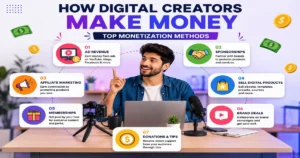
Common monetization methods include:
- Advertising
- Affiliate Marketing
- Sponsorships
- Memberships
- Coaching
- Consulting
- Digital Products
- Online Courses
The most successful creators build multiple income streams rather than depending on a single source.
Step 7: Keep Learning
The creator economy changes rapidly.
Platforms evolve.
Algorithms change.
Technology improves.
New opportunities emerge.
Successful creators remain curious and continuously improve their skills.
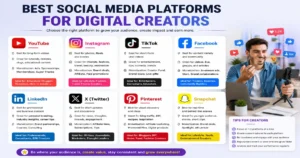
Best Platforms for Digital Creators
Choosing the right platform depends on your content style, audience, and goals.
YouTube
YouTube is one of the best platforms for creators who want long-term growth.
Unlike many social media platforms, YouTube content can continue generating views for years through search and recommendations.
Educational content, tutorials, reviews, and entertainment perform particularly well.
Facebook remains a powerful platform for community building.
Features such as pages, groups, reels, and live streams allow creators to engage audiences in multiple ways.
Many creators monetize through Facebook creator programs and partnerships.
Instagram is ideal for visual content.
Creators in niches such as fitness, travel, fashion, photography, and lifestyle often perform exceptionally well on the platform.
LinkedIn is perfect for business professionals, consultants, marketers, recruiters, and entrepreneurs.
It is one of the best platforms for building professional authority.
Pinterest functions more like a visual search engine than a traditional social platform.
It can generate significant website traffic over long periods.
X
X is excellent for sharing ideas, industry insights, and building thought leadership.
Many creators use it to connect with professionals and grow influence.
Skills Required for Digital Creators
Many people assume successful creators are naturally talented. In reality, most successful creators develop valuable skills through practice and experience.
Content Creation
Every creator must learn how to communicate ideas effectively.
Video Editing
Video remains one of the most powerful content formats online.
Basic editing skills can dramatically improve content quality.
SEO
Search Engine Optimization helps creators reach audiences through search engines.
Understanding keywords and search intent can significantly increase visibility.
Copywriting
Strong writing skills improve titles, descriptions, articles, emails, and social media posts.
Graphic Design
Visual presentation influences clicks, engagement, and brand perception.
Storytelling
People connect with stories more than facts.
Creators who master storytelling often build stronger audience relationships.
Marketing
Understanding audience psychology and promotion strategies helps creators grow faster.
Analytics
Data reveals what content works best.
Successful creators use analytics to improve future content decisions.
AI Tools
Artificial intelligence is becoming an important part of content creation.
Creators who learn to use AI effectively can save time and improve productivity.
Tools Used by Digital Creators
Behind every successful creator is a collection of tools that improve efficiency and content quality.
Canva
Canva helps creators design thumbnails, graphics, presentations, and social media posts without advanced design skills.
ChatGPT
ChatGPT can assist with brainstorming, research, outlines, content planning, and idea generation.
CapCut
CapCut has become one of the most popular video editing tools for creators producing short-form content.
Adobe Photoshop
Photoshop remains a professional standard for image editing and graphic design.
Google Trends
Google Trends helps creators identify trending topics and understand audience interests.
CreatorFix Tools
As creators grow, content planning becomes increasingly important.
Instead of guessing what audiences want, creators can use specialized tools to identify content opportunities, discover keywords, and improve titles.
If you’re serious about growing as a creator, you can explore CreatorFix tools at:
The platform offers creator-focused resources designed to help with keyword research, title optimization, content planning, and audience growth.
How Digital Creators Make Money
One of the biggest advantages of becoming a digital creator is the variety of income opportunities available.
Advertising Revenue
Platforms share advertising revenue with eligible creators.
Many creators earn income simply from content views.
Affiliate Marketing
Creators earn commissions by recommending products and services through referral links.
Sponsorships
Brands pay creators to promote products to their audiences.
Brand Deals
Long-term partnerships often provide stable recurring income.
Online Courses
Many creators package their expertise into educational programs.
Digital Products
Templates, ebooks, guides, presets, and resources can generate passive income.
Memberships
Exclusive communities often provide recurring monthly revenue.
Consulting and Coaching
Experienced creators can monetize expertise through consulting and coaching services.
The most successful creators typically combine multiple income streams rather than depending on a single source.
How Much Do Digital Creators Earn?
Creator income varies dramatically depending on niche, audience size, engagement, and monetization strategy.
Beginner Creators
$0–$500 per month
Intermediate Creators
$500–$5,000 per month
Full-Time Creators
$5,000–$50,000+ per month
Top Creators
Some creators generate hundreds of thousands or even millions of dollars annually.
The most important factor is not follower count but audience trust and effective monetization.
Benefits of Becoming a Digital Creator
Digital creation offers several advantages.
- Flexible schedule
- Work from anywhere
- Unlimited growth potential
- Personal brand development
- Global audience reach
- Multiple income opportunities
- Creative freedom
Many creators value the ability to build something that belongs entirely to them.
Challenges Faced by Digital Creators
Despite the opportunities, content creation is not always easy.
Common challenges include:
- Competition
- Burnout
- Algorithm changes
- Slow growth
- Income uncertainty
- Continuous learning requirements
Understanding these challenges helps creators maintain realistic expectations.
Future of Digital Creators
The future of digital creators looks extremely promising.
The creator economy continues expanding every year.
Artificial intelligence is making content creation more efficient.
Short-form video remains incredibly popular.
Community-based businesses are becoming increasingly valuable.
Creators who combine authenticity, expertise, creativity, and technology will likely experience the greatest success in the coming years.
Is Digital Creator a Good Career in 2026?
For many people, the answer is yes.
Digital creation offers flexibility, scalability, and opportunities that traditional careers often cannot provide.
Pros
- Flexible lifestyle
- Multiple income streams
- Global opportunities
- Creative freedom
- Personal brand growth
Cons
- Competition
- Income fluctuations
- Slow growth
- Constant learning requirements
Final Verdict
Digital creation is not a shortcut to overnight success.
However, for individuals willing to learn, create consistently, and provide value, it can be one of the most rewarding careers available in 2026.
Frequently Asked Questions
What is a digital creator on Facebook?
A digital creator on Facebook creates and publishes content such as videos, reels, posts, and live streams to engage audiences and potentially earn income.
What does a digital creator do?
Digital creators research, create, publish, promote, and optimize content while building communities around their expertise.
How do digital creators make money?
They earn through advertising, affiliate marketing, sponsorships, memberships, courses, coaching, consulting, and digital products.
Can anyone become a digital creator?
Yes. Anyone with valuable knowledge, skills, creativity, or experiences can become a digital creator.
Is digital creator a real job?
Absolutely. Millions of people earn part-time and full-time incomes through content creation.
What is the difference between a creator and an influencer?
Creators focus on producing valuable content, while influencers focus more on influencing audience decisions and behavior.
How long does it take to become successful?
Growth varies, but most successful creators spend months or years consistently creating content before achieving significant results.
Which platform is best for digital creators?
The best platform depends on your niche, but YouTube, Facebook, Instagram, LinkedIn, and Pinterest remain among the strongest options.
Conclusion
Digital creators are shaping the future of education, entertainment, marketing, and business. They help people learn new skills, discover opportunities, solve problems, and connect with communities around the world.
The creator economy continues to grow, creating opportunities for anyone willing to share valuable knowledge and build meaningful relationships with an audience.
Whether your goal is to become a YouTuber, blogger, educator, entrepreneur, or social media creator, there has never been a better time to start.
Focus on helping people, stay consistent, keep learning, and continue improving your content. Over time, those efforts can grow into a powerful personal brand and a sustainable digital business.